A new student walks into your room in the first weeks of school.
They have a 12-page IEP that you haven’t read yet. There’s a behavioral plan somewhere inside it, along with accommodations, response strategies, progress-monitoring requirements, and a communication plan.
You also have 23 students waiting for directions.
You need to know three things immediately:
-
What does this student need from me today?
-
What situations may require additional support?
-
Who needs to hear from me, and when?
Reading every page of the IEP closely is important, but realistically, during the first hour, you also need a reliable way to find the information that affects what happens next.
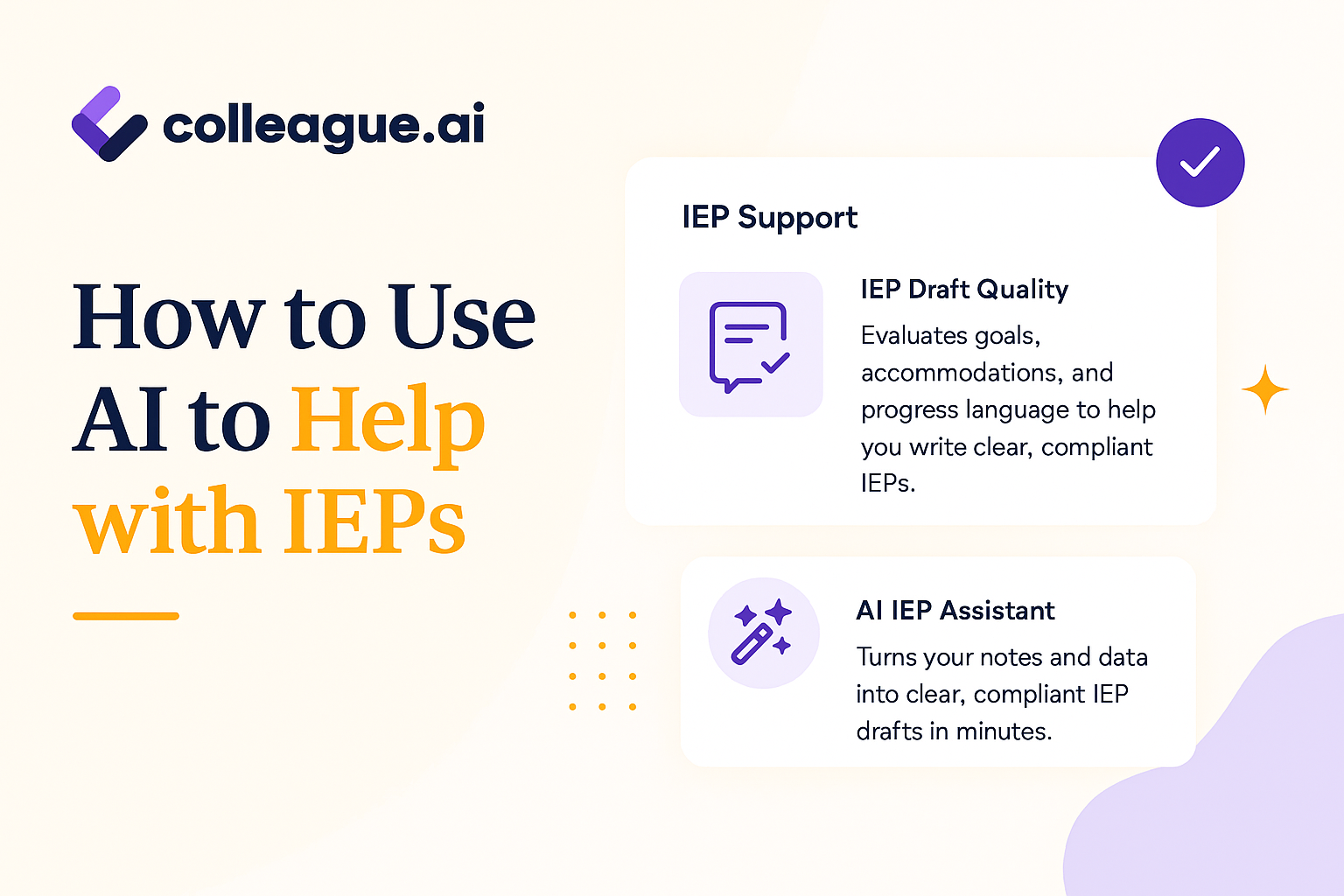
Colleague AI can turn the document into a focused implementation brief, giving you a practical starting point while you review the full IEP and coordinate with the student’s support team.
IEP Documents Can Take Time to De-Code for Teachers
Most IEP documents contain a lot of information or details, and the challenge is locating the details that shape your next interaction with the student and understanding what the implications are for you as their teacher.
For example, behavioral supports can appear across multiple sections:
-
Present levels of performance
-
Annual goals
-
Supplementary aids and services
-
Accommodations
-
Special factors
-
Behavior intervention plans
-
Staff responsibilities
-
Family communication expectations
A single support may appear on page three, gain context on page eight, and connect to a staff responsibility listed near the end.
Colleague AI helps you identify those connections quickly and organize them into something you can use during instruction.
3 Things to Focus on to Accommodate IEPs in the First Days and Weeks
Before the student moves into group work, independent practice, lunch, or another unfamiliar part of the day, focus on three areas.
1. Accommodations you must implement
These are the supports that need to show up in the student’s experience from the beginning.
Look for details such as:
-
Seating or environmental needs
-
Directions presented in a specific format
-
Additional processing or response time
-
Break procedures
-
Assignment modifications
-
Transition warnings
-
Access to sensory or regulation supports
-
Testing accommodations
The exact language matters. Colleague AI can locate and organize the accommodations while preserving references to the source sections for verification.
2. Behavioral supports that shape your response
A behavior plan may identify patterns, prevention strategies, replacement behaviors, reinforcement systems, and adult responses.
You need the parts that guide action:
-
Known antecedents or high-risk situations
-
Early signs of dysregulation
-
Preventive supports
-
Replacement behaviors the student is learning
-
Reinforcement procedures
-
De-escalation steps
-
Actions staff should avoid
-
Procedures for requesting additional support
This information supports consistency. A student should encounter a coordinated plan across classrooms, rather than a different adult response in every period.
3. The communication plan
The IEP may assign communication responsibilities to specific staff members.
Identify:
-
Who serves as the primary contact
-
Which behaviors or events require documentation
-
How often updates are expected
-
Whether communication goes to the case manager, behavior specialist, counselor, administrator, or family
-
Which data the teacher is responsible for collecting
How to Use AI to Extract the Implementation-critical Details From IEPs
Step 1: Choose “Ask Charlie” and Tell Colleague AI What You Need
Colleague AI is designed as district AI infrastructure, with FERPA, COPPA, GDPR, and SOPIPA compliance and SOC 2 certification. Student data is not used to train Colleague AI’s models or third-party models.
Upload the IEP documentation. Or, the snipping tool is a great option for screenshot applicable information while keeping identifiers out of the equation.
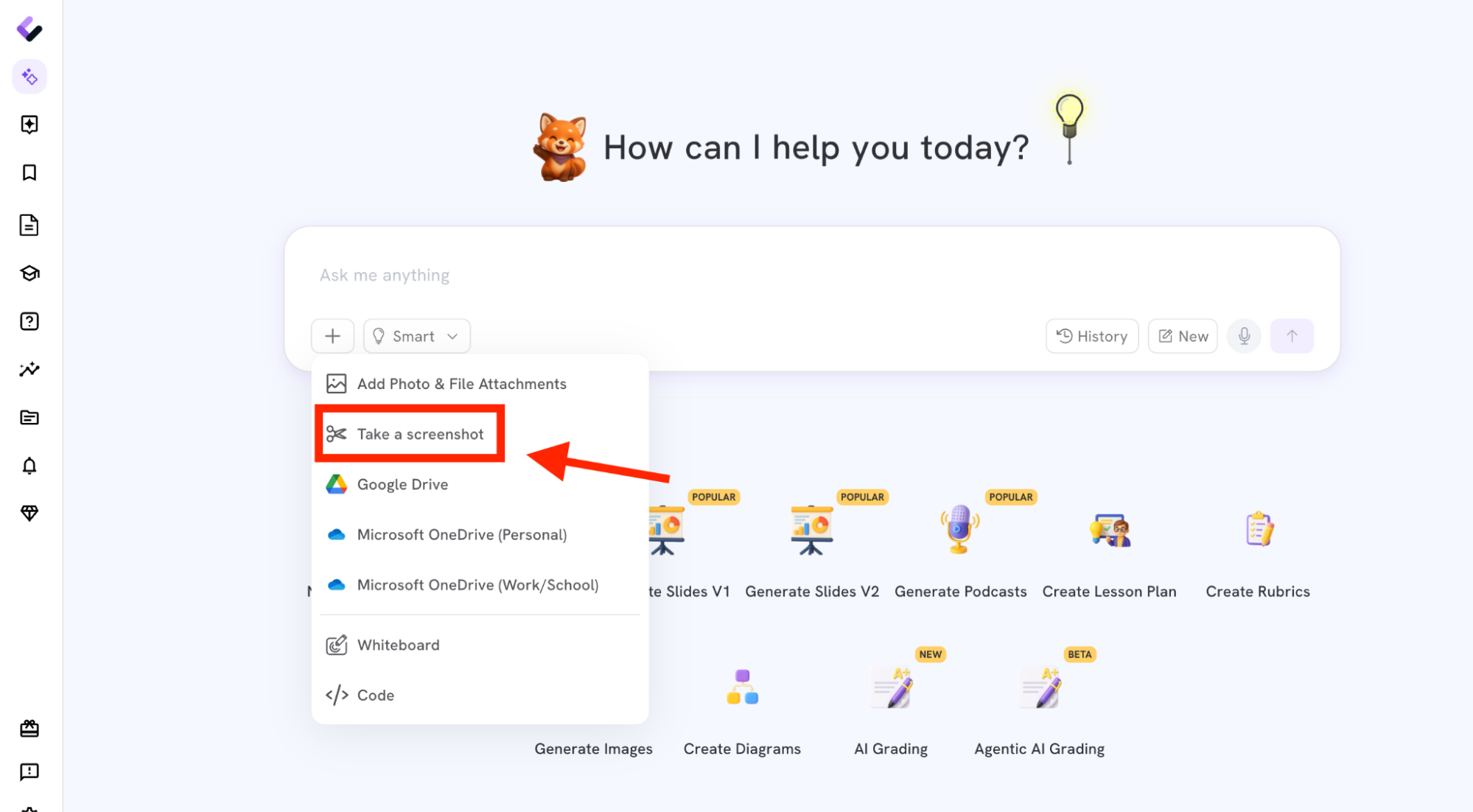
Ask Colleague AI to focus on information that affects immediate classroom implementation.
Sample Prompt:
Review this IEP and identify the information I need to support this student during the first day of class. Focus on required accommodations, behavioral prevention strategies, signs that the student may need support, de-escalation procedures, reinforcement systems, and communication responsibilities. Cite the page or section where each item appears. Do not add recommendations that are not included in the document.
A focused request reduces the chance that critical information gets buried inside a broad summary.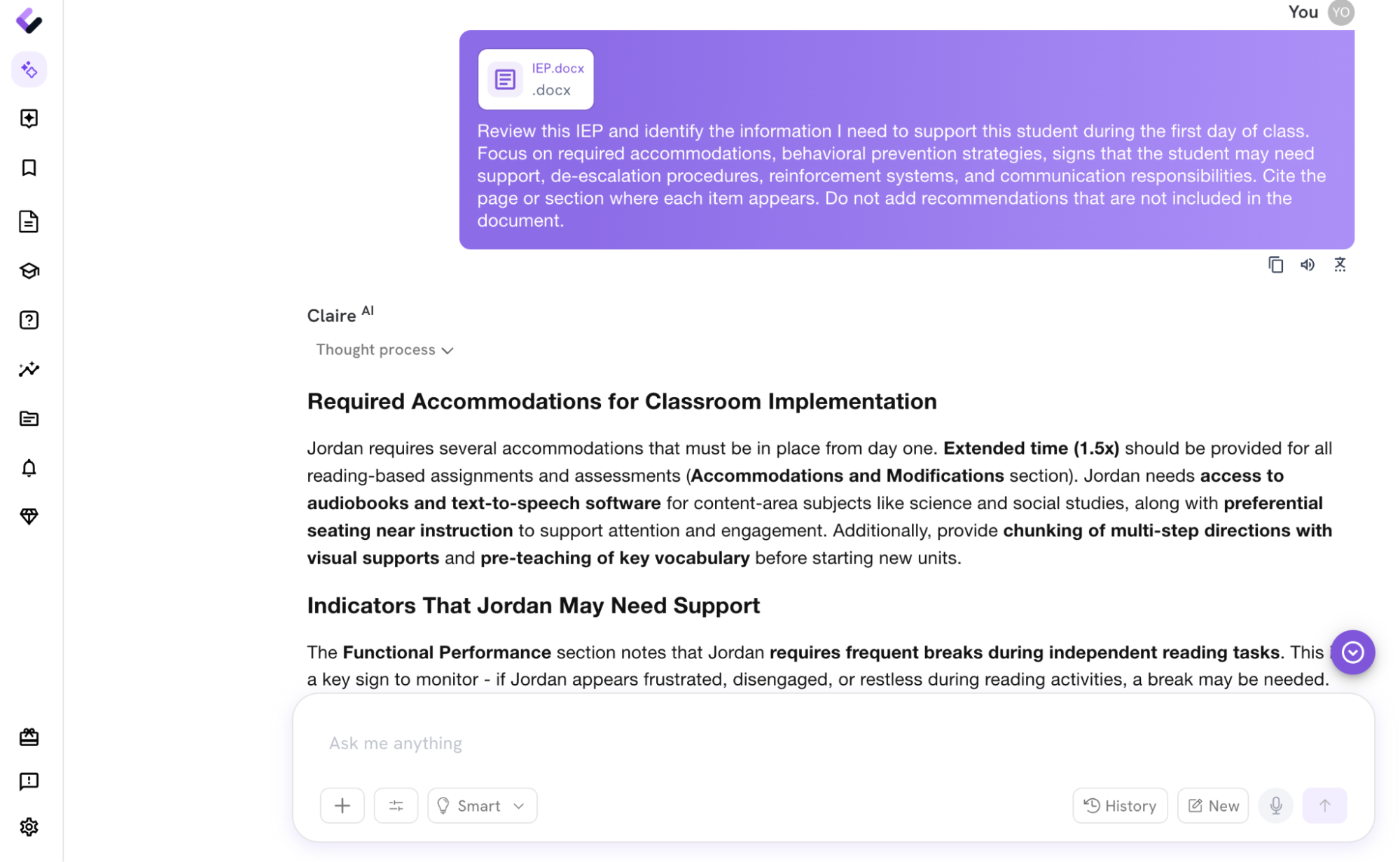
Once Colleague AI generates an overview, you can save this as a separate document if you want, but you don’t have to
Step 2: Ask for a one-page implementation brief
Next, ask Colleague AI to organize the findings into a classroom-ready format.
Prompt:
Turn the identified information into a one-page image implementation brief for the classroom teacher. Use these headings:
-
Supports to put in place immediately
-
Situations that may require additional preparation
-
Early signs the student may need support
-
Required adult responses
-
Reinforcement and regulation supports
-
Communication and documentation responsibilities
-
Information I need to confirm with the case manager
Keep the wording specific. Include source references for every item.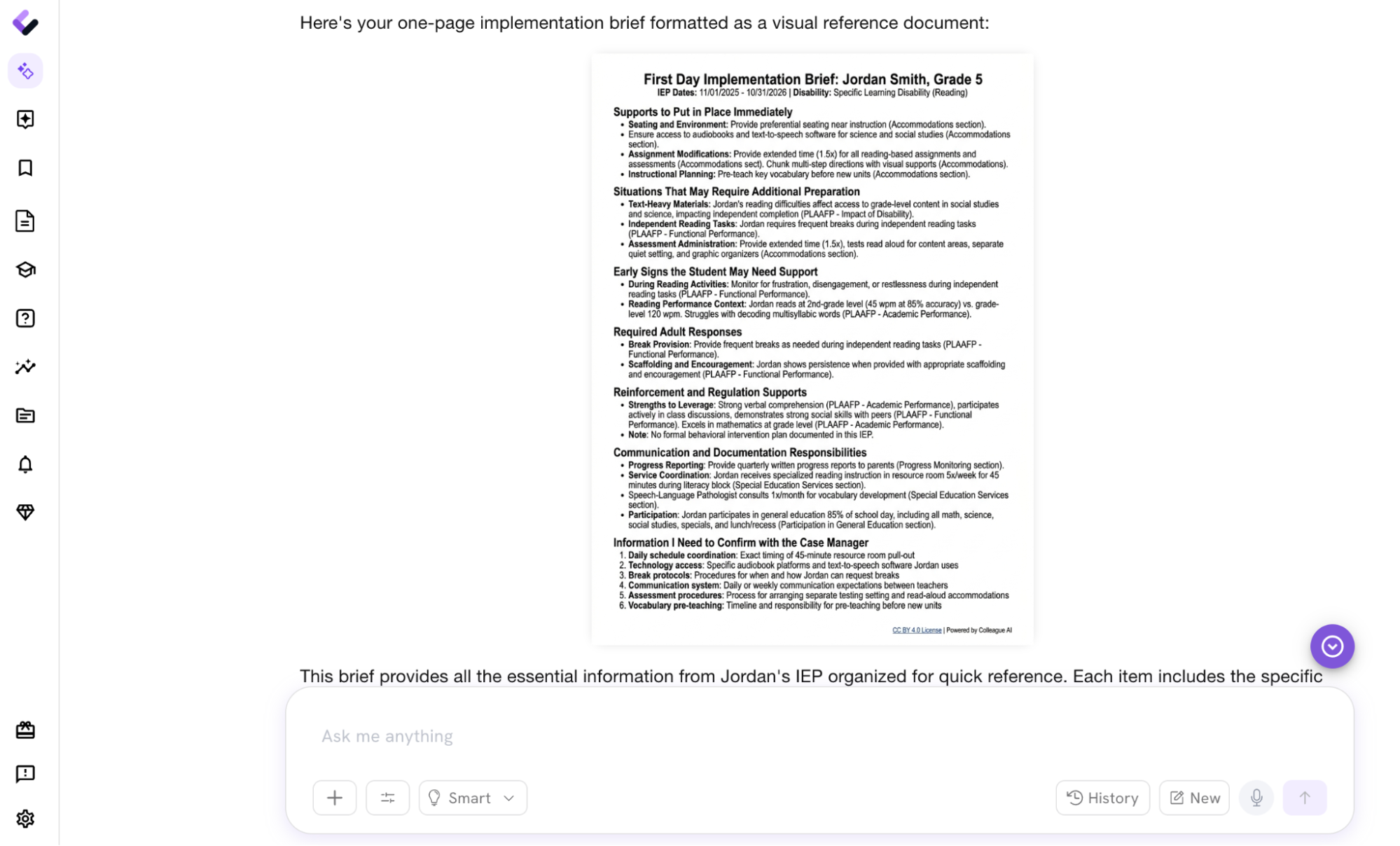
The finished output should give you a usable view of the student’s plan while keeping each item connected to the original document.
Step 3: Verify the output against the IEP
Colleague AI provides context and organization, the IEP remains the governing document, and you are still 100% responsible for accurate implementation - so verify and think critically!
Use the source references to check important details:
-
Required accommodations: Confirm the wording, setting, and frequency.
-
Crisis or safety procedures: Read these sections directly and follow district protocols.
-
Behavioral response steps: Confirm the sequence and the staff members involved.
-
Reinforcement systems: Check what is provided, when it is provided, and who manages it.
-
Communication requirements: Confirm the audience, frequency, and documentation method.
-
Staff responsibilities: Identify which actions belong to you and which require another team member.
You can also ask Colleague AI’s assistant to specifically cite where it got the information it has provided to you so you can see which document it’s using.
Step 4: Plan the rest of the student’s first day
Once the critical elements are verified, ask Colleague AI to help you apply them to the schedule already in front of you.
Prompt:
Using only the verified supports from this IEP, create a plan for the rest of today’s class period. The lesson includes whole-group directions, partner work, ten minutes of independent practice, and a closing exit ticket. Identify where each documented accommodation or behavioral support should be implemented. Keep the plan concise enough to place beside my lesson plan.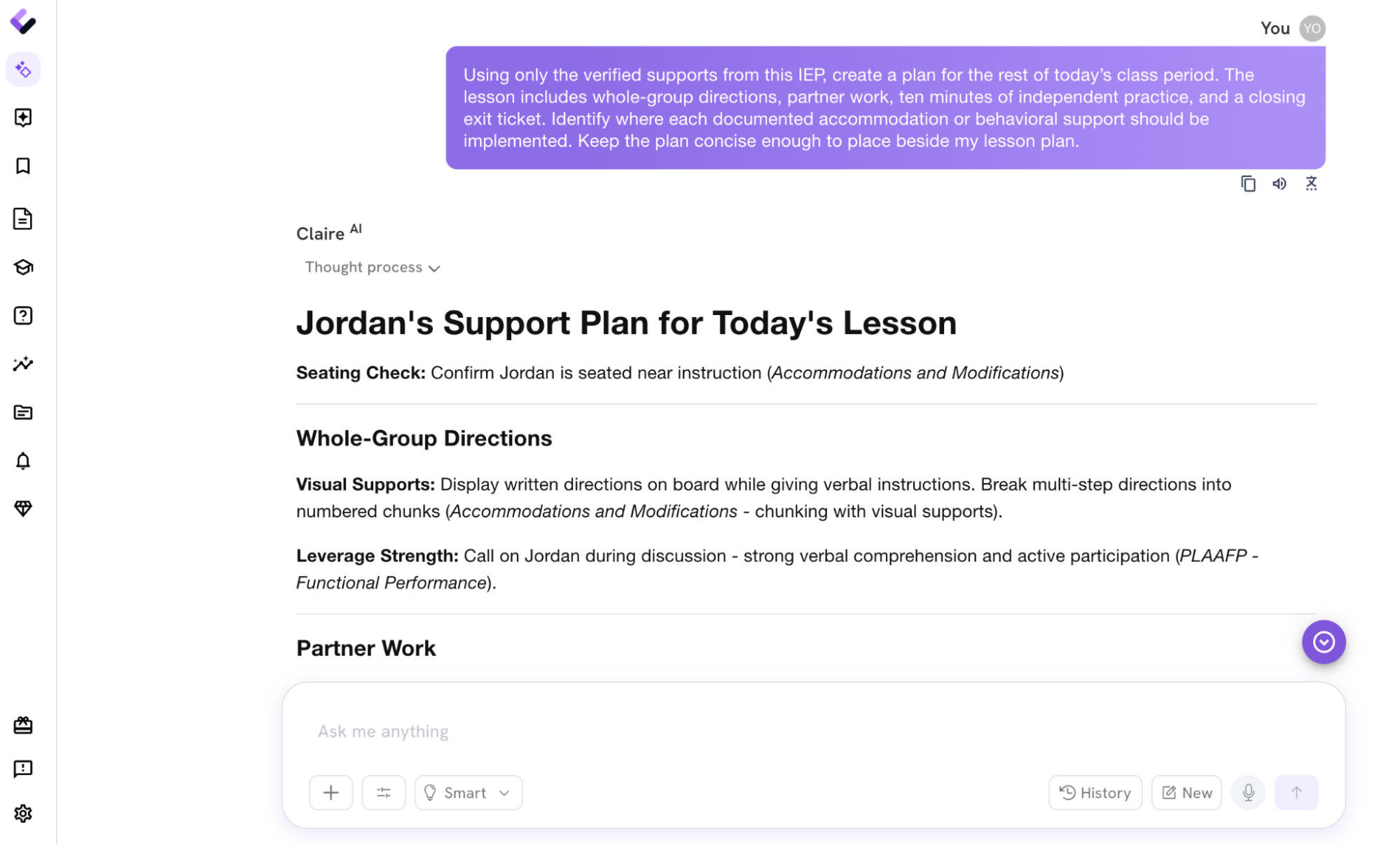
The output might identify moments when a transition warning is required, where a planned break can fit, how directions should be presented, or when reinforcement should occur.
The instructional goal stays intact. The support plan helps the student access it.
Step 5: Prepare your follow-up questions
A document can tell you the formal plan. The student’s team can help you understand how the plan has worked in practice.
Ask Colleague AI to create a short list of questions based on gaps or unclear language in the IEP.
Prompt:
Based on this IEP, identify up to five questions I should ask the case manager before tomorrow. Prioritize questions that affect implementation, staff coordination, data collection, or student safety. Explain which section of the IEP led to each question.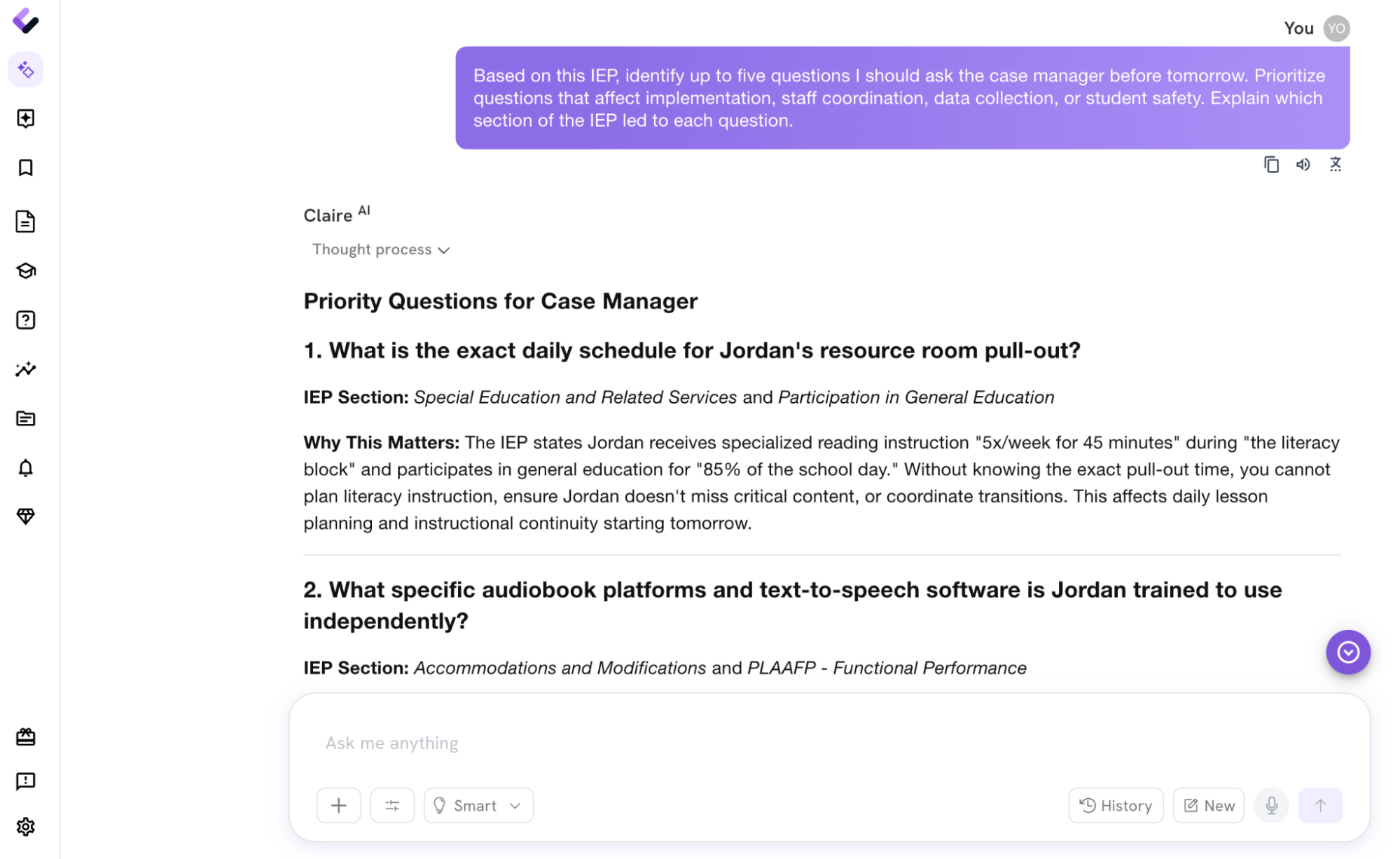
Useful questions may address who holds specific materials, how a reinforcement system is tracked, what a student’s break procedure looks like in practice, or which team member should be contacted after a documented incident.
Step 6: Draft the communication you’re responsible for
The IEP may require a check-in with the case manager, counselor, behavior specialist, or family.
Colleague AI can prepare a factual draft based on the communication requirements in the document.
Prompt:
Draft a brief update to the student’s case manager. State that the student joined my class today, confirm the accommodations and behavioral supports I implemented, list any observations I should document, and ask the unresolved questions identified above. Use neutral, objective language. Do not make diagnostic interpretations.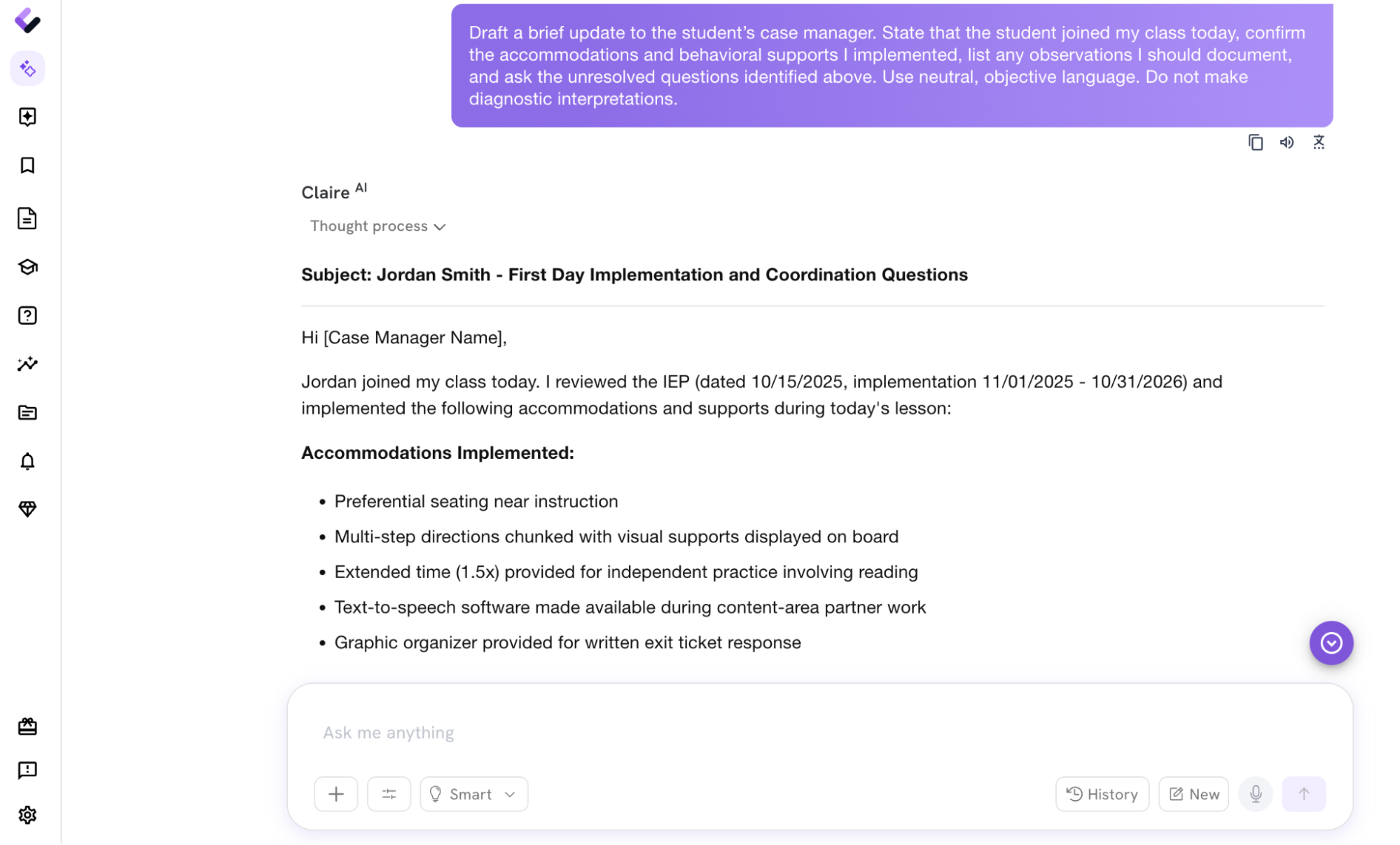
Review the message, add your firsthand observations, and send it through the district’s approved communication system.
What Colleague AI should help you produce
By the end of this workflow, you should have:
-
A one-page implementation brief
-
A verified list of required accommodations
-
A clear summary of behavioral prevention and response procedures
-
A plan for applying the supports during today’s lesson
-
A list of questions for the student’s case manager
-
A draft of any required follow-up communication
You still need to read the full IEP. You also gain a responsible way to act while the school day is already moving.