
You’ve introduced the unit vocabulary three times. The words are on the wall, students copied the definitions, you’ve used them during instruction….and after all that, a few students can match the terms on a quiz.
And when you ask students to explain their thinking, and the vocabulary disappears.
Instead of infer, they say “guess.” Instead of erosion, they say “when the dirt moves.” Instead of character motivation, they say “why the person did it.”
By Week 3, this is a common instructional problem: students have encountered the vocabulary, and they still need repeated opportunities to connect each term to ideas, examples, relationships, and real situations - application situations and being pushed further up Bloom’s taxonomy.
Colleague AI can help teachers create those opportunities from the vocabulary they’re already teaching.
The Situation: Students Know the Definitions, Sort Of
Imagine you’re beginning the third week of a middle school science unit on Earth’s surface.
Your vocabulary list includes:
-
Weathering
-
Erosion
-
Deposition
-
Sediment
-
Landform
-
Runoff
Students completed a vocabulary chart during Week 1. You reviewed the terms with slides. They used the words in a digital matching activity.
On Monday, you show an image of a river carrying soil downstream and ask students to explain what’s happening.
A student says:
“The water is moving the dirt somewhere else.”
The student understands the basic process but the vocab hasn’t become part of how they communicate their understanding.
Another round of copying definitions probably won’t change that.
Students need to compare the terms, sort them, apply them, and use them to explain something that matters.
How to Create Activities That Get Vocabulary to Stick
Give Colleague AI the unit context, grade level, standards, and vocabulary list, then ask for several activities that require students to use the words in different ways.
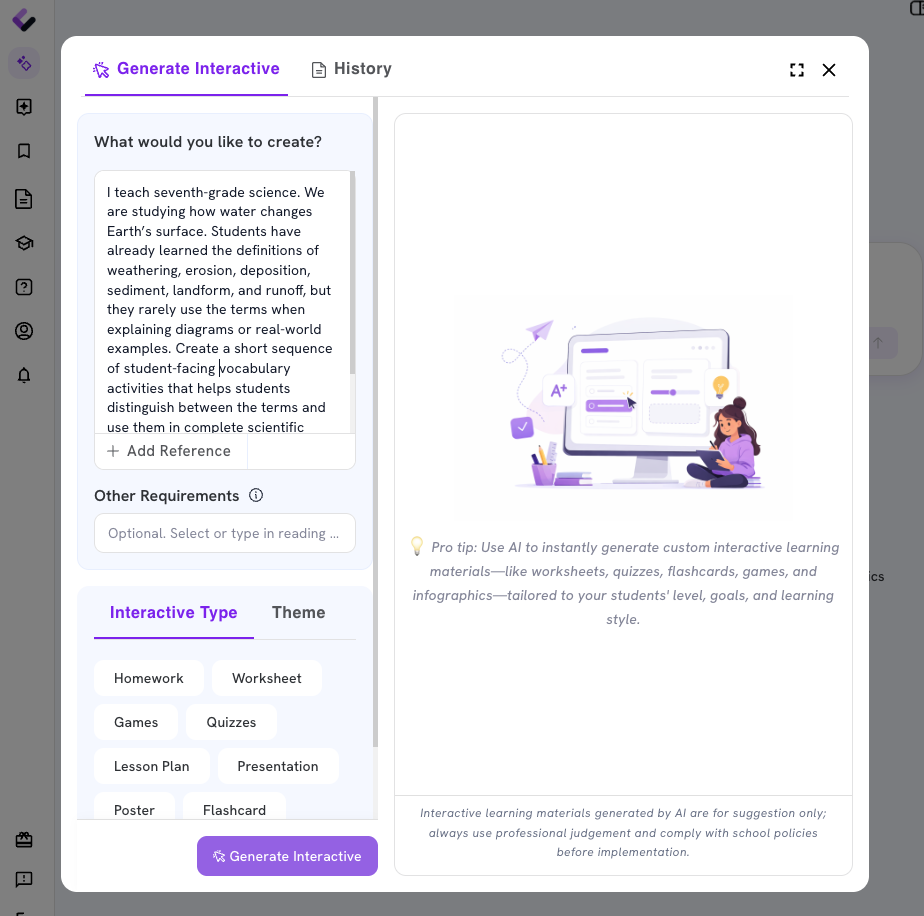
Step 1: Start a Generate Interactive and add the instructional context
Start by launching a generate interactive session and give information Colleague AI needs to create classroom-ready materials. Include:
-
Grade level
-
Subject and unit
-
Vocabulary terms
-
What students already know
Where students are getting stuck -
Any reading, language, or accessibility needs
Example prompt
I teach seventh-grade science. We are studying how water changes Earth’s surface. Students have already learned the definitions of weathering, erosion, deposition, sediment, landform, and runoff, but they rarely use the terms when explaining diagrams or real-world examples. Create a short sequence of student-facing vocabulary activities that helps students distinguish between the terms and use them in complete scientific explanations. Include supports for multilingual learners and students who need sentence frames.
Be sure to note any requirements you want in the requirements section:
- Grade level
- Standard
- Reading, language, or accessibility needs
- etc.
Step 2: Choose Your Activity Type
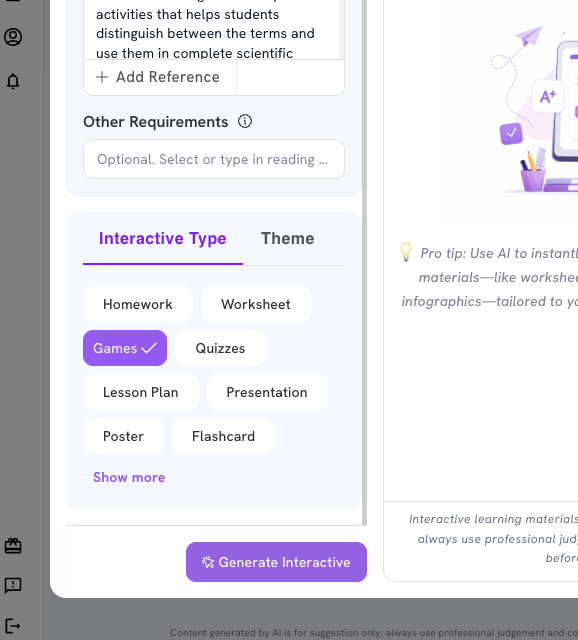
Colleague AI gives you the opportunity to choose from a variety of activities:
-
Homework
-
Worksheet
-
Games
-
Quizzes
-
Poster
-
Flashcards
-
Graphic organizers
-
Storyboards
-
Newsletters
-
Class schedules
-
Surveys
-
Infographics
-
Animations
-
Research reports
-
And a few others that don’t apply here
In this case, a worksheet or game would give an opportunity to apply their knowledge.
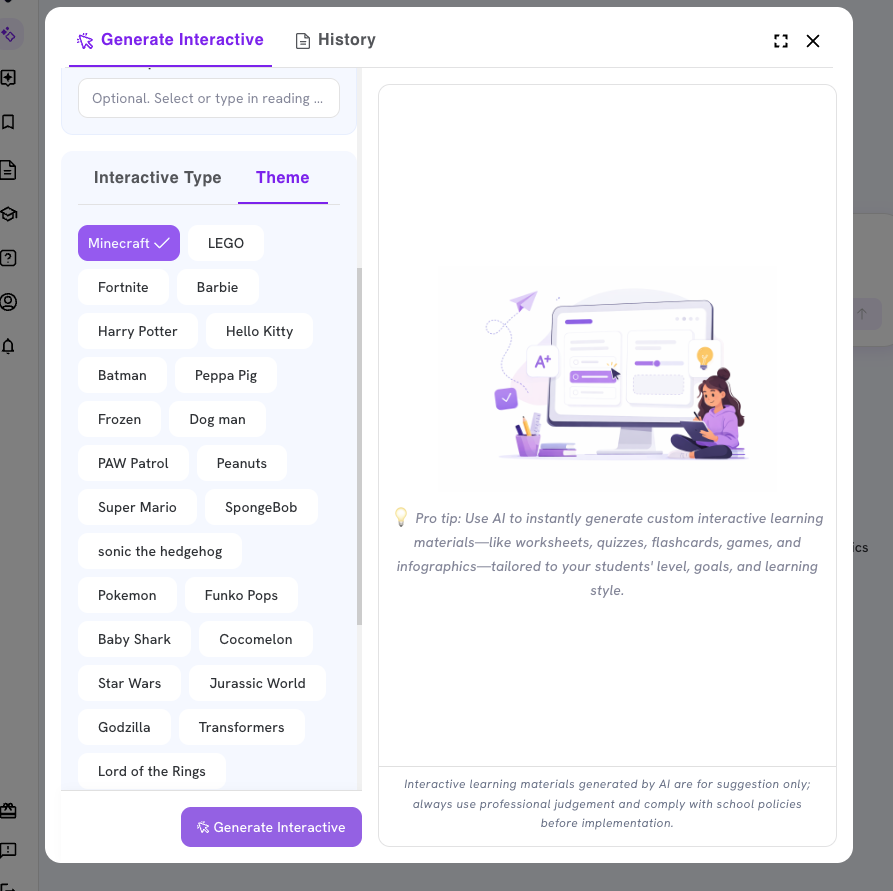
Step 3: Choose Your Theme
It’s up to you if you want to choose a theme or not - it will depend on your class, grade level, and what gets their attention. It’s unlikely that a Harry Potter theme would apply well here….but the choice is yours.
Step 4: Check Your Prompt Before Generating
It’s useful to re-read your prompt before hitting the generate button.
Things to consider in the instructions would be:
- Specifying specific activities you may want the student to do
- Specifying things you do NOT want students to do
- Information on style or design or colors
- Talking about levels in Bloom’s taxonomy, DOK levels, or other applicable frameworks and models
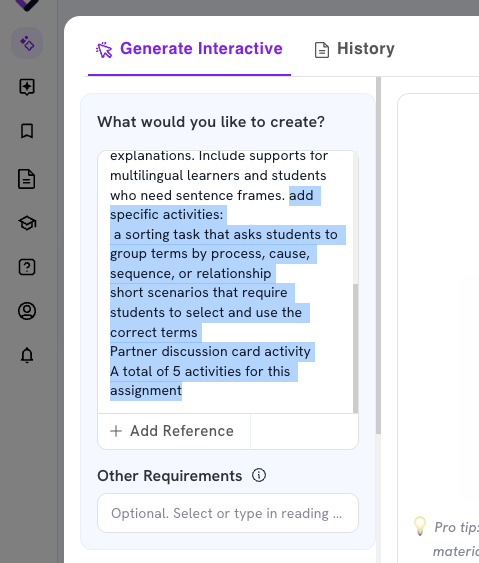
In this case, we may want to add specific activities we want to see:
-
a sorting task that asks students to group terms by process, cause, sequence, or relationship
-
short scenarios that require students to select and use the correct terms
-
Partner discussion card activity
-
A total of 5 activities for this assignment
Step 5: Generate!
Step 6: Adjust the activity for your students
The first output is a starting point.
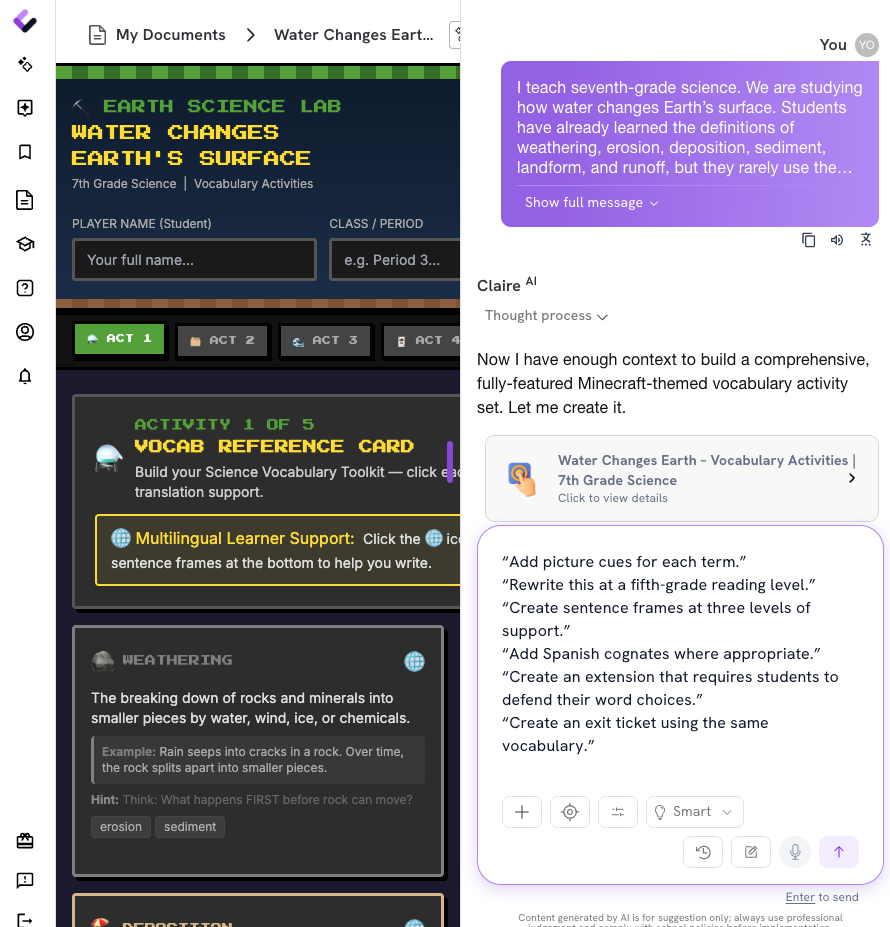
Teachers can ask Colleague AI to revise the activity based on what they know about their class.
Useful follow-up requests include:
-
“Add picture cues for each term.”
-
“Rewrite this at a fifth-grade reading level.”
-
“Create sentence frames at three levels of support.”
-
“Add Spanish cognates where appropriate.”
-
“Create an extension that requires students to defend their word choices.”
-
“Create an exit ticket using the same vocabulary.”
Colleague AI provides the context and materials. Teachers decide which supports preserve the learning goal and which revisions fit the students in front of them.
Step 7: Publish, Assign and Distribute
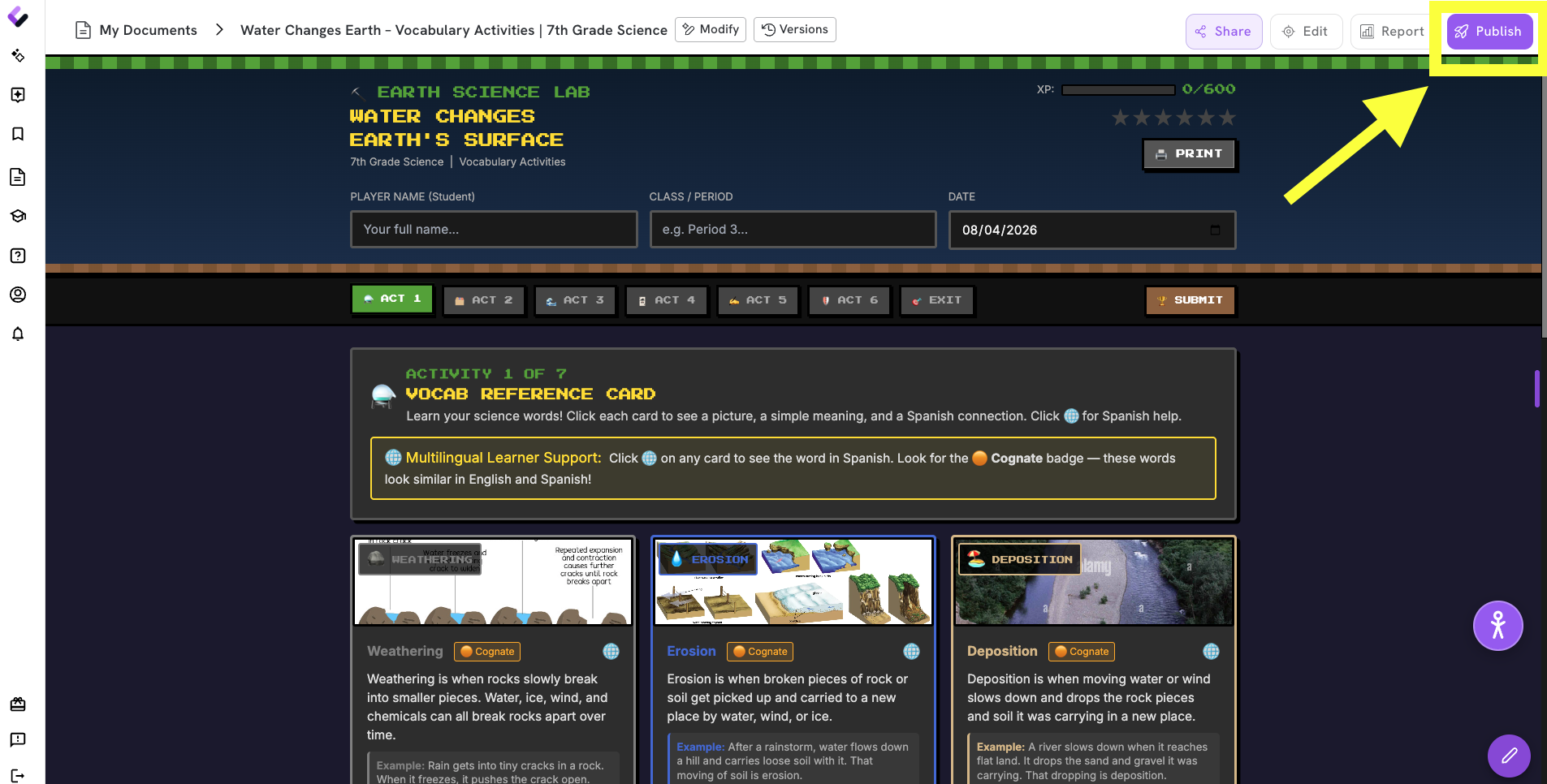
When your activity is ready, click the publish button.
You can choose whether this is an assessment or just an assignment - in our case, it’s not an assessment, it’s practice.
Now your students will see it in their dashboard. You can also send them a link.
Step 8: View Your Report
Once students have started (or completed) your class time or the assignment, you can view how they did by clicking view report
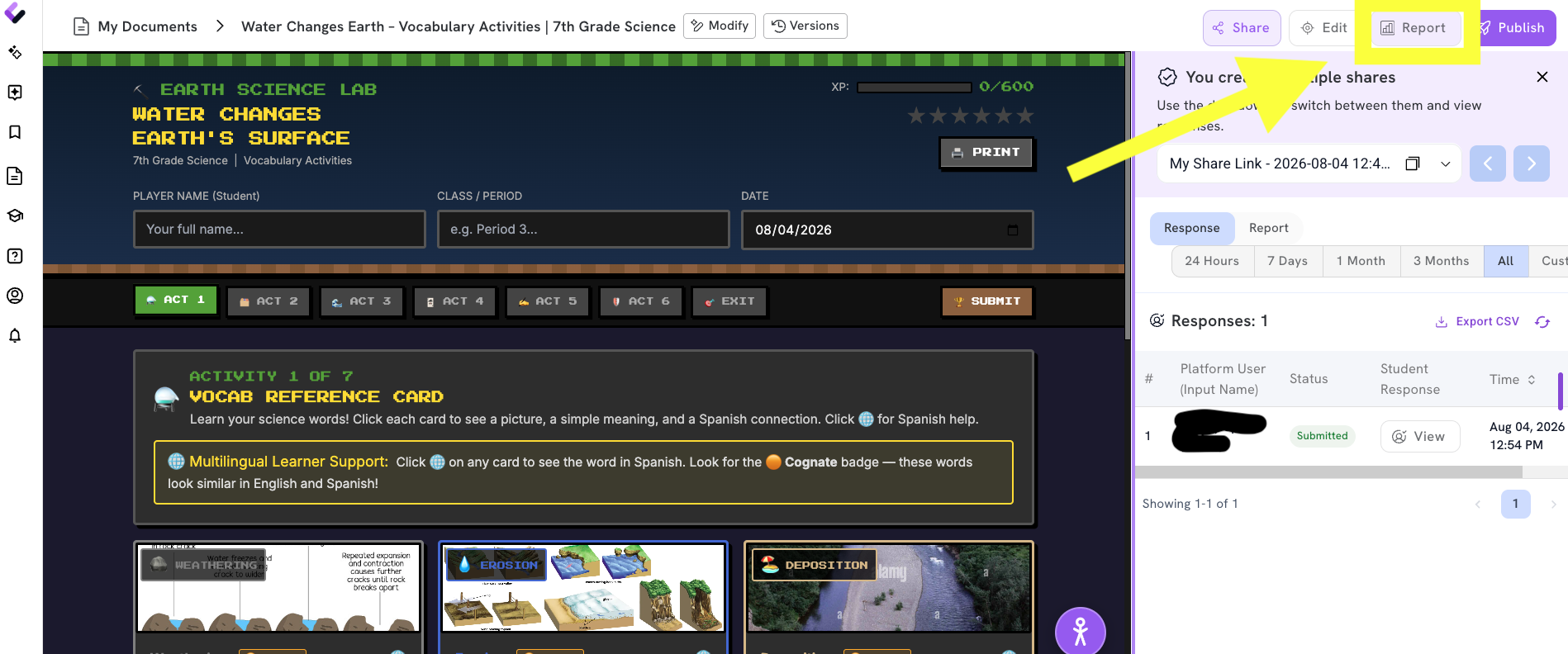
Here’s what the report looks like:
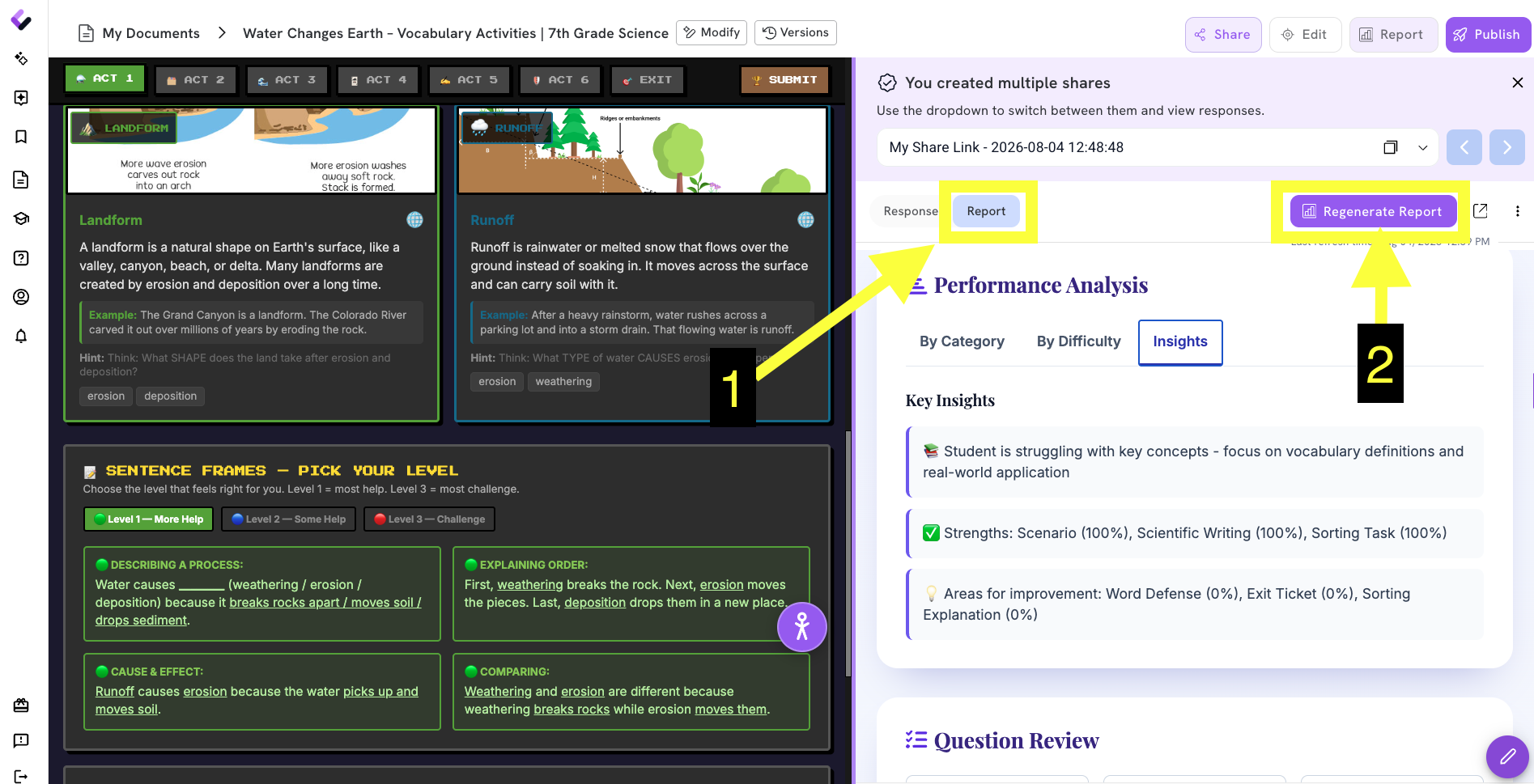
Did It Work??
This is the ultimate question! Looking at the data in the report and talking to your students are great ways to start answering.
You get several ways to see what students understand with such an activity:
-
Can students distinguish closely related terms?
-
Can they connect vocabulary in a sequence?
-
Can they apply the words to a new example?
-
Can they use the language while explaining cause and effect?
-
Can they communicate the idea with decreasing levels of support?
That information can guide the next lesson.
Some students may need more work distinguishing weathering from erosion. Others may understand the science and need language supports to express it. A few may be ready to analyze how several processes interact over time.
The same six words can reveal several different learning needs once students are asked to use them.