A district’s AI plan becomes useful when teachers can connect it to the work in front of them: preparing a lesson, adapting an activity or deciding whether an output is appropriate for their students.
The 2026 national survey Adopted but Unstructured offers a starting point for that conversation. Among K–12 public school math and science teachers surveyed, 58% reported using GenAI for instructional tasks; 31% used it weekly or daily. A separate finding is equally important for professional learning: 58% reported receiving no formal GenAI training.
Teachers’ most requested training topics were lesson planning and materials creation, tool basics, and differentiation. Those requests give district teams a practical place to begin.
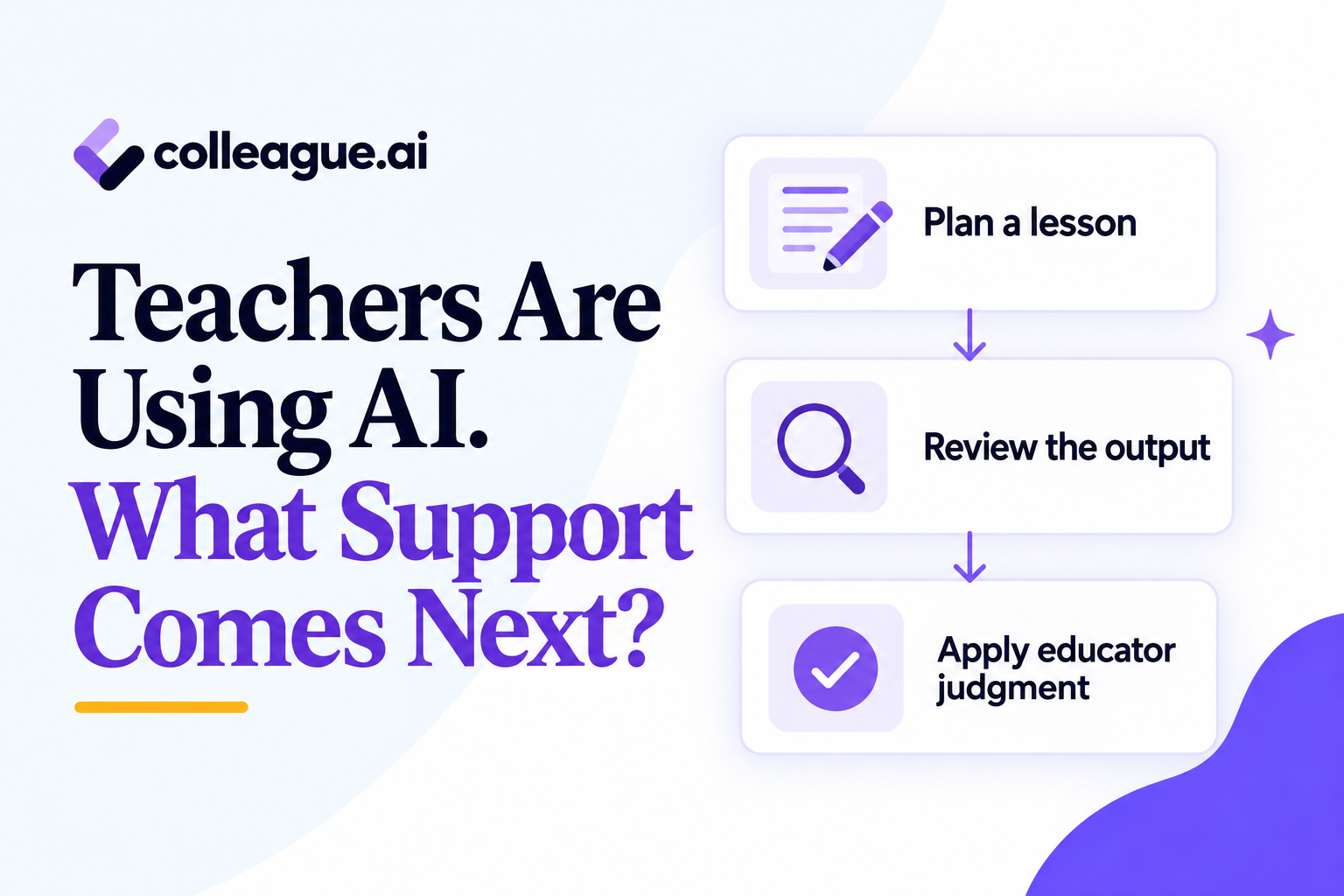
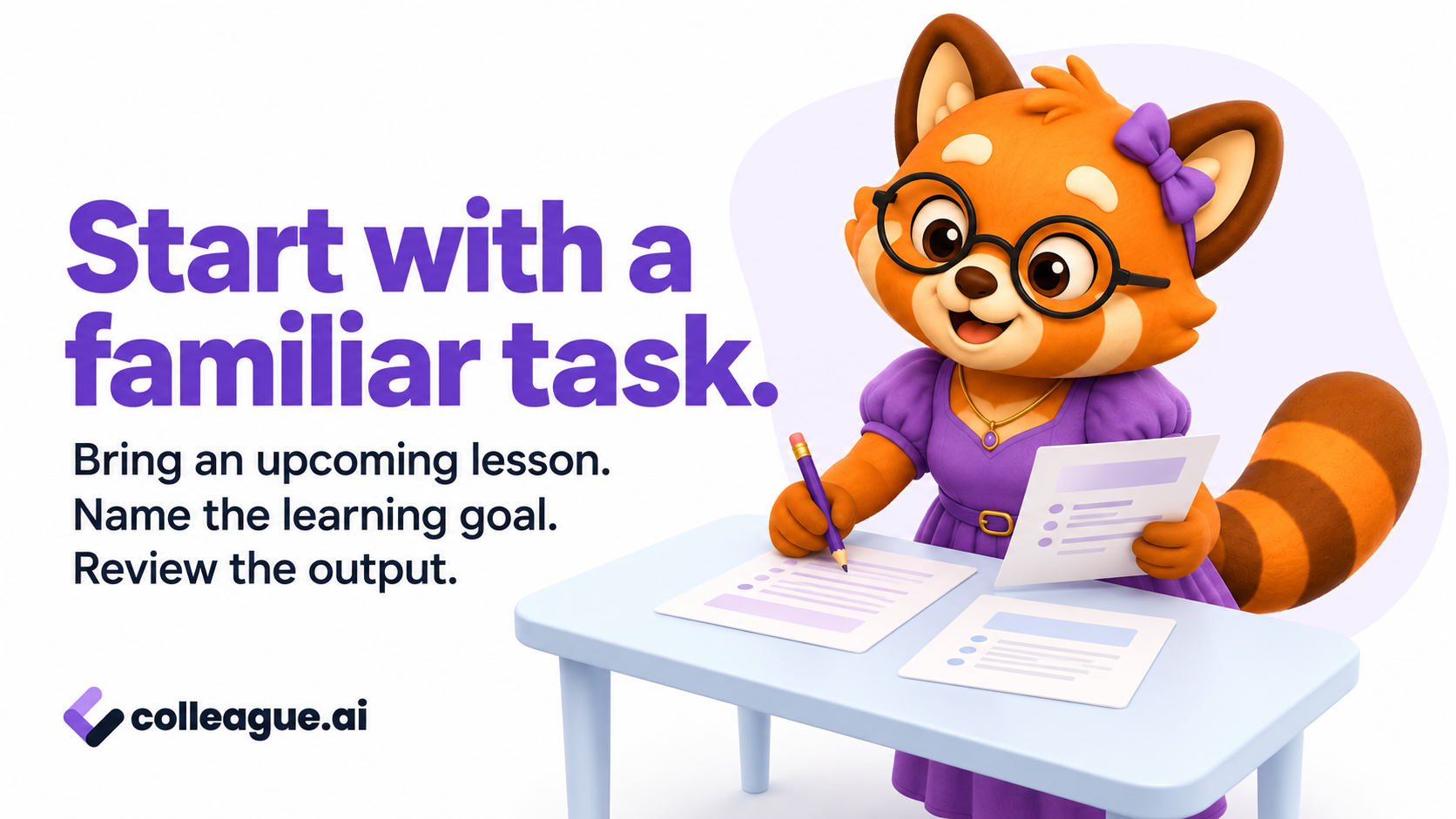
For a professional-learning session, ask participants to bring an upcoming lesson or activity. Identify the instructional goal before opening an AI tool. Then review the resulting material together: Is it accurate? Does it align with the intended learning? What needs to change for these students?
The useful output is both a revised resource and a clear explanation of the educator’s decisions. That gives colleagues something concrete to discuss and build on.

Sixty-one percent of respondents identified the time needed to learn GenAI as a barrier. An implementation plan therefore needs to account for when educators can try, evaluate and revisit the work.
Consider using an existing team-planning session for a focused activity, followed by a short return to the same task. Invite teachers to share an output they revised or rejected and explain why. Those examples can help a team discuss quality without assuming that a polished response is ready for students.
Training should make local expectations usable. Which tools are approved? What information may educators enter? Which activities require review? How do expectations differ for teacher preparation and student use?
A district can bring its curriculum, technology and instructional leaders into the same conversation, then give educators a clear place to find answers and raise questions.
The survey describes reported practices and associations. It does not establish that training or district policies caused higher AI use, and it is not an evaluation of Colleague AI’s effectiveness. The practical actions above are suggestions for district teams to consider.
Source: Adopted but Unstructured (2026). Read the full report.