If it's 10pm and you're staring at an essay assignment you posted three weeks ago, trying to work out what you're actually going to grade it on, this one's for you.
Creating a Standards-aligned Rubric For the Pacing Guide's Assignment
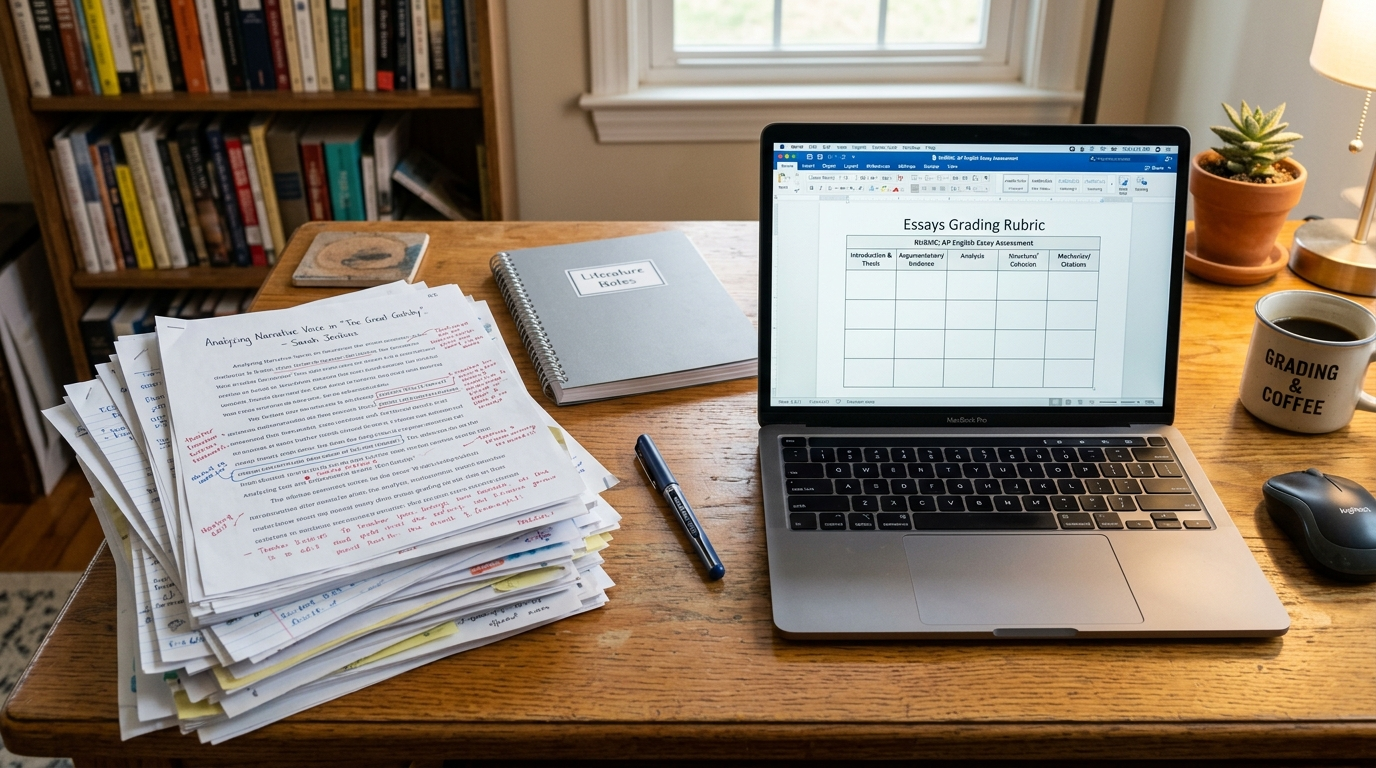
The pacing guide has said “short essay” since the first week of school. Three weeks out, it was easy to plan around. Now it's not three weeks out. It's Wednesday, and the essay is due Friday.
Students started asking Tuesday afternoon. Is grammar going to count? How long does this need to be? What if someone uses two pieces of evidence instead of three, but they're really good ones? Reasonable questions. The honest answer so far has been some version of “we'll go over that.”
Writing a rubric after a full day of teaching means finding the actual standard, deciding what “meets expectations” looks like for this grade and this assignment, and wording all of it so a sixth grader can read it without help. Before it can go out to students tomorrow morning.
What Colleague AI Does Here
A rubric request is a more specific ask than it sounds. It has to hold up against four things at once.
Standards-aligned
Tied to the actual writing standard for this grade and assignment type, not a generic five-paragraph checklist.
Grade-appropriate
Worded for the students using it, not for the adult grading it.
Criteria-specific
Each score level describes what's actually different about it. Not “good,” “okay,” “needs work.”
Built for self-assessment
Written so a student can check a draft against it before turning anything in, not just so a teacher can score it after.
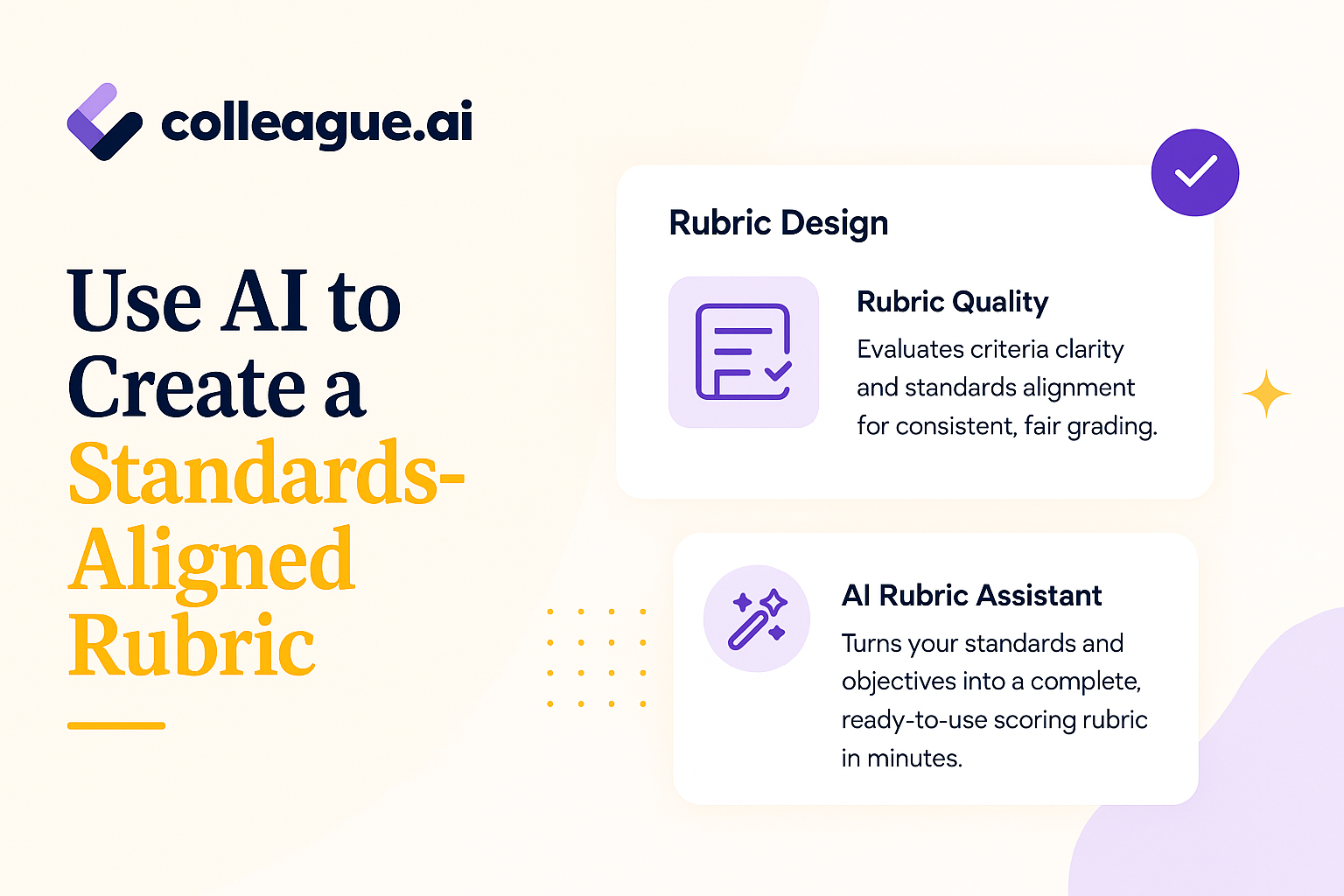
Colleague AI builds the rubric from what the teacher already has on hand: the standard, the assignment, and the grade level. What comes back is ready to hand out, not a first draft that still needs an editing pass at 10pm.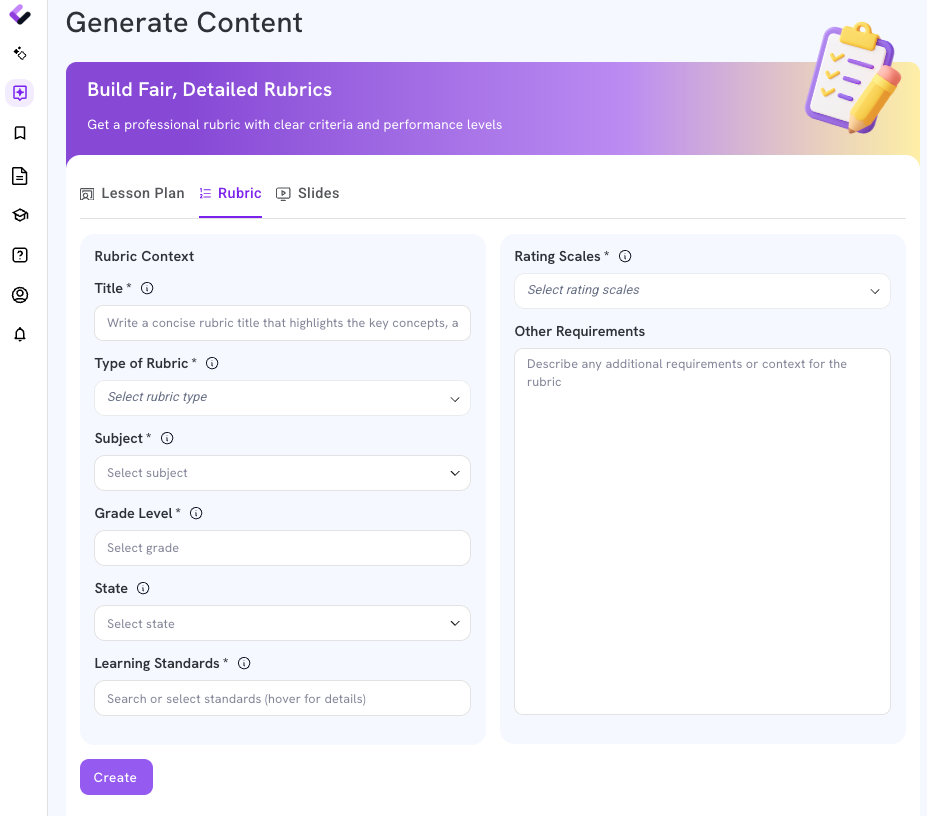
How to Build a Standards-aligned Rubric, Step by Step
Step 1: Choose “rubric” and the assignment type
From the assessment builder, select rubric, then name what it's actually for: short essay, lab report, presentation. A rubric for a lab report and a rubric for an argumentative essay get graded on different criteria entirely.
Step 2: Enter the grade level and the standard
Grade six. Standard W.6.1: write arguments to support claims with clear reasons and relevant evidence. Pull it from the district's standards list, or paste in the code directly.
Step 3: Add the assignment details
Example
“Students write a one-page argumentative essay responding to a prompt about the school lunch policy. Must include a claim, two pieces of textual evidence, and one counterargument.” One sentence, but it's the sentence that keeps the rubric from reading like a template.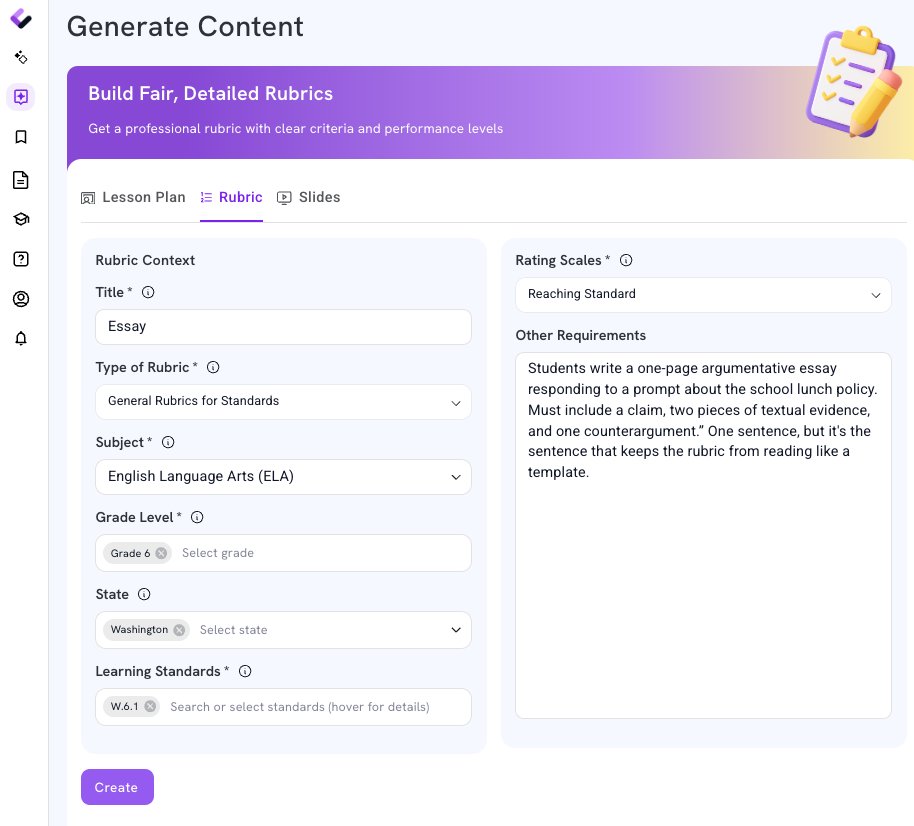
Step 4: Review what comes back
Colleague AI generates a full rubric: four criteria, four score levels each, worded at grade level. Two of the four criteria, as generated:
| Criteria | 4 – Exceeds | 3 – Meets | 2 – Approaching | 1 – Beginning |
|---|---|---|---|---|
| Claim & Evidence | States a clear, defensible claim and supports it with two or more pieces of specific, relevant evidence, explaining how each piece connects to the claim. | States a clear claim and supports it with at least two pieces of relevant evidence. | States a claim, but evidence is vague, repeated, or only loosely connected to it. | Claim is unclear or missing. Little to no supporting evidence. |
| Organization | Clear structure (claim, evidence, counterargument, conclusion) with smooth transitions between ideas. | Logical structure with an identifiable claim, evidence, and conclusion. | A structure exists, but ideas are out of order or hard to follow in places. | No clear structure. Ideas appear disconnected from one another. |
Step 5: Check the self-assessment language
Colleague AI also generates a set of “I can” statements pulled straight from the criteria, written for students, not teachers.
-
I can state my claim in one clear sentence.
-
I can back up my claim with at least two pieces of evidence from the text.
-
I can explain how each piece of evidence supports my claim.
-
I can respond to a counterargument instead of ignoring it.
-
I can organize my paragraphs so a reader can follow my thinking without getting lost.
Step 6: Edit anything that doesn't match the class
Swap “textual evidence” for “evidence from the article,” if that's the language the class actually uses. Loosen the length requirement. Add a fifth criterion if the assignment calls for it. It's still the teacher's rubric.
Step 7: Export and post it
PDF, LMS, or straight into the assignment description. Same afternoon, before the next question comes in.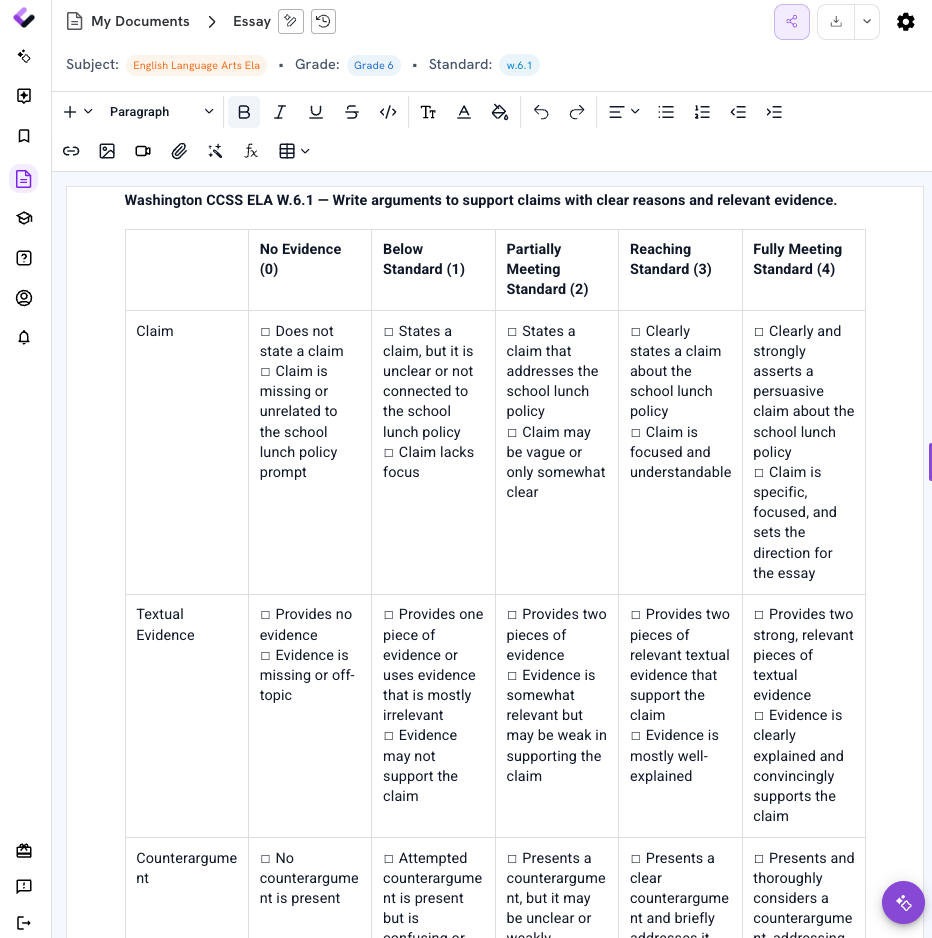
What's In Hand, Under Two Minutes
-
A rubric with four criteria and four score levels, tied to the actual W.6.1 standard.
-
Wording a sixth grader can read without asking what it means.
-
A self-assessment checklist students can use before they turn anything in.
-
An actual answer to “what's this graded on,” instead of “we'll figure that out.”
What counts as “meets expectations” for this class, this assignment, this year, that's still the teacher's call. Colleague AI's job is making sure that call is on paper before the essay is due, not while it's being graded at 10pm on a Sunday.
The standards alignment and criteria language here come from Colleague AI's research partnership with AmplifyLearn.AI at the University of Washington College of Education.