Dr. Min Sun
Co-founder & CEO, Colleague AI
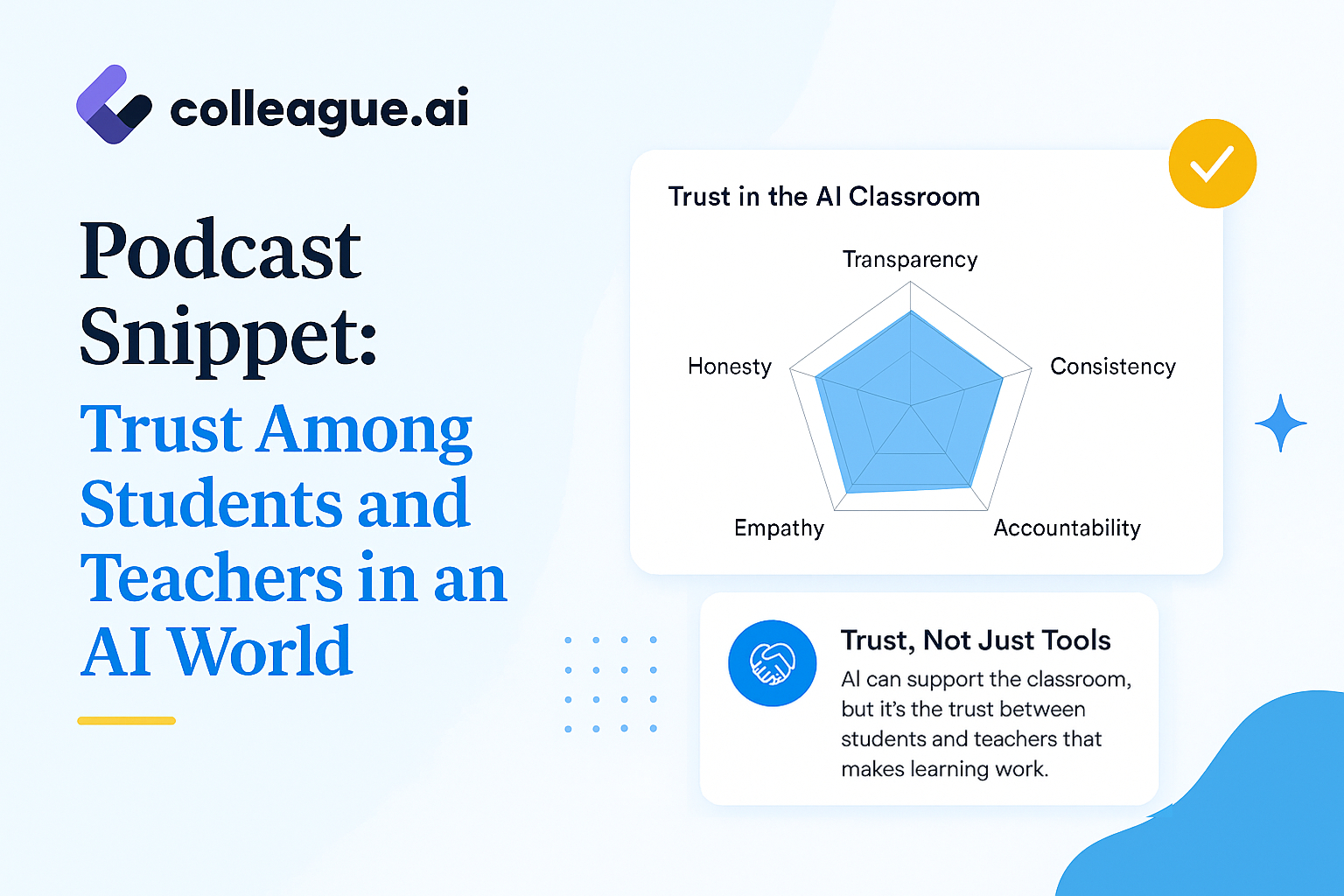
There is a general concern or worry in the field when AI is introduced into the classroom, into schools that there is going to be more human relationship development with the technology, with the computer, with the machine, and our human relationships are going to suffer.
How do we maintain or rebuild the relational trust between teachers and students, among students, between school and family? What role do admin and parent play? All three of you are leading scholars, educators, and leaders in this field: I will invite any one of you one or two comments, chime in, please.
Jonathan Briggs:
Director of Technology, Eastside Preparatory Academy
I think in some ways this is the question. A lot of the dynamics between students and teachers is trust, and I think you know these things swing back and forth over time.
But I think because we’re in that moment right now, whereas a student, if you’re a struggling writer and you know that AI can write a better paper than you, and you’re focused on the best product that you can submit, it puts you in a really difficult position. And in a lot of ways, the student and the teacher are both aligned: they want to understand how that student thinks and help them think better. That is what everybody wants, but we’re a little bit stuck in a number of systematic ways about this, and the only the only real antidote to that, I think, is is going to come down to trust, and it’s both teacher to student, and it’s also student within student, like in an internal sort of you know metacognition level.
If you look at like a say a student who is struggling in math and they go to a tutor for help. That tutor is going to know not to tell them the answer. They’re going to know to keep asking the questions until the student arrives at [the answer] as almost a obvious insight. And you can use AI to do that. And there are some you know agents out there that are tuned specifically to work in this way, but that is the student having to be aware that it’s worth going through the harder way for themselves, right? And that’s, and I think that we can support that by making sure that the assignments feel relevant and like they will benefit the student.
Busy work is especially susceptible to cheating, always has been, and now it’s just easier to do, but a lot of that relies on the student trusting that the teacher knows what will help them learn better.
Lori Nichols:
Educator and Leadership Team, Renton Prep
We’ve offered a few different ways to get student feedback on their use of generative AI through this school year, and so I’ve asked teachers through our AI studios where AI is integrated into fine arts, but also in the daily classroom and other subjects.
We asked students and teachers to have conversations with their students about how are you using AI, what are your opinions about AI, and so we had some teachers do some video recordings, and then we also did an online survey.
And what I thought was interesting was when I took the results of the survey and then put them into Claire AI (the AI Assistant in the Colleague AI platform) and asked for answers to be organized by the questions. And Claire AI even broke it down further. But what was really interesting in the summary, it said students are essentially asking teachers to be thoughtful gatekeepers, introduce AI where it genuinely enhances learning, teach critical critical evaluation skills, and model appropriate use, and maintain spaces for non AI work.
So our students, from their responses, it shows that they’re thinking about this. They’re thinking about where is AI an effective tool? Where you know, do I still need to learn you know these foundational things, and how is my teacher and my relationship with them pivotal to that?